


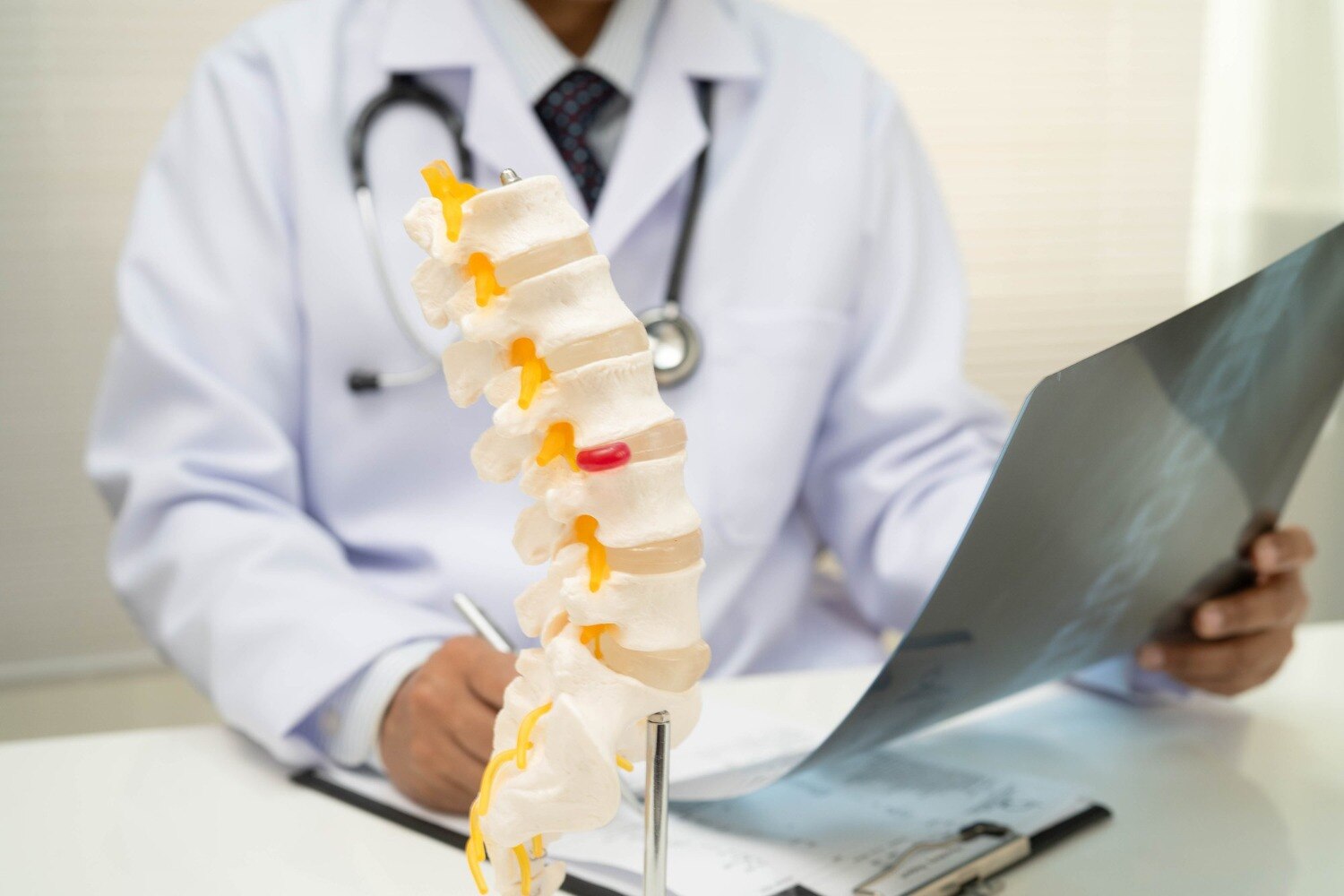
Paralysis can result from spinal cord compression, trauma, stroke, brain injury, nerve damage or muscle and neuromuscular disorders, so the correct first clinician depends on the cause. By the end, you will know when emergency care is needed, what a spine specialist can diagnose or treat, and how medical care connects with active neuro-rehabilitation.
Key takeaways
- Treat new paralysis, breathing trouble, or bladder loss as a medical emergency.
- A spine specialist checks the spinal cord, nerves, imaging, strength, and sensation.
- Surgery can relieve compression or stabilise injury but cannot guarantee movement returns.
- Physiotherapy rebuilds strength, balance, transfers, mobility, and independence after diagnosis or surgery.
When paralysis needs emergency care instead of an appointment
New paralysis, rapidly worsening weakness, loss of sensation, breathing difficulty, or new bladder or bowel loss requires immediate hospital assessment—not a routine “spine specialist near me” appointment. After a fall, crash, or other injury, keep the person still and call emergency services; spinal fracture, cord compression, bleeding, or instability can worsen with movement.
| Pattern | Right first clinician | Why it cannot wait |
|---|---|---|
| Sudden facial drooping, arm weakness, speech trouble, confusion, or one-sided paralysis | Emergency department and stroke team | These signs may indicate stroke, where minutes affect treatment |
| Weakness after trauma, rapidly progressing limb loss, severe neck or back pain, or new bladder or bowel dysfunction | Emergency department, then spine or neurosurgical review | The team must exclude cord compression, fracture, bleeding, or infection |
| Weakness with breathing or swallowing difficulty, collapse, or widespread muscle failure | Emergency department, with neurology or critical-care assessment | The problem may involve the brain, neuromuscular junction, muscles, or breathing muscles rather than the spine |
A spine specialist is not the right first clinician when facial weakness, speech loss, altered consciousness, or sudden one-sided symptoms suggest a brain event. Neurology, emergency medicine, speech-language therapy, and rehabilitation often need to coordinate paralysis treatment.
Even when a spinal cause is confirmed, urgent surgery or medicines address the cause; rehabilitation, respiratory care, skin checks, bladder and bowel support, positioning, and spasticity management remain essential for preserving function.
What a spine specialist checks before recommending treatment
A spine specialist determines the source by matching the pattern of weakness and sensation with the anatomy involved. A spinal cord problem often affects both sides below a particular level and may cause stiffness, abnormal reflexes, or bladder and bowel changes.
A nerve-root problem usually follows one nerve pathway, with shooting pain and weakness in selected muscles.
The assessment usually follows these steps:
- Take a detailed history: when weakness began, whether it followed trauma, and whether pain, numbness, fever, cancer, infection, speech trouble, facial drooping, or vision changes occurred.
- Test strength, sensation, reflexes, muscle tone, coordination, walking, and cranial nerves. Sudden one-sided weakness with speech or facial changes points toward the brain, such as stroke, rather than the spine.
- Order targeted imaging. MRI can show spinal cord compression, injury, tumour, abscess, bleeding, or severe stenosis; CT is useful for fractures and bone instability. Brain imaging is needed when the examination suggests stroke or brain injury.
- Use electromyography and nerve-conduction studies when peripheral nerve, nerve-root, neuromuscular-junction, or muscle disease is possible. Blood tests can identify infection, inflammation, metabolic problems, or muscle damage.
- Record the spinal cord injury level and completeness using the International Standards for Neurological Classification of Spinal Cord Injury, including its AIS grade, then repeat examinations to track change.
A spine specialist for paralysis treatment is the right clinician when a structural spinal cause needs assessment. The final plan may also require neurology, rehabilitation medicine, physiotherapy, occupational therapy, and nursing.
What medical or surgical treatment can actually change
Surgery can change the pressure, stability or damage threatening the spinal cord; it cannot promise that movement will return. A spine specialist for paralysis treatment may identify a treatable structural cause such as compression, fracture, instability, tumour, abscess or severe spinal stenosis, then choose treatment or refer you to the right team.
Possible interventions include:
- Decompression surgery to remove pressure from the spinal cord or nerve roots
- Stabilisation with immobilisation or spinal fixation after a fracture or unstable injury
- Treatment or referral for a tumour, abscess, bleeding or infection
- Medicines and specialist management for inflammation, pain or spasticity
- Referral to neurology, rehabilitation medicine, nursing and therapy services
For suitable adults with acute traumatic spinal cord injury, an AO Spine guideline recommends offering decompression within 24 hours when medically feasible. That is a conditional recommendation based on low-quality evidence, not a promise of restored movement.
Surgery may prevent further damage while preserving the function that remains, but it cannot reliably repair nerve cells or reconnect every disrupted pathway. Recovery depends on the injury’s level and completeness, the time before treatment, complications and the nervous system’s response.
Paralysis treatment therefore continues after an operation through active rehabilitation, wheelchair or gait training, bladder and bowel care, pressure relief, respiratory support, and management of pain and spasticity. Functional electrical stimulation and robotic or body-weight-supported gait systems can assist selected patients, but they are not cures.
How physiotherapy supports recovery after diagnosis or surgery
Effective rehabilitation starts with a baseline, not a massage session. A physiotherapy clinic for paralysis should test how the diagnosis affects daily function, then turn those findings into measurable tasks. Repeated examinations show whether ability is changing; surgery or decompression does not automatically rebuild movement.
- Bed mobility, including rolling and repositioning
- Transfers between the bed, chair and toilet
- Sitting and standing balance
- Walking ability or wheelchair propulsion
- Joint range and muscle control
- Pain, spasticity, skin protection and breathing
Treatment then uses repeated, task-specific practice at an appropriate level of difficulty. Strengthening, balance work, stretching, education and equipment selection support that practice rather than replace it. Your programme should address goals such as standing for a transfer, walking safely indoors or managing a wheelchair independently.
Functional electrical stimulation, robotic gait systems and body-weight-supported treadmill training can assist selected patients, but they are adjuncts, not cures. The therapist should monitor fatigue, falls, pressure injuries and changes in muscle tone while progressing the plan. Pressure-relief techniques, home positioning and caregiver training also reduce preventable complications.
Gains can continue during outpatient or community rehabilitation, so a slow early response does not always mark the final outcome.
How to choose coordinated paralysis care near you
Choose care by the gaps it closes, not by the title on the door. A spine specialist near me is important when compression, fracture, instability, tumour, abscess or severe stenosis needs diagnosis or urgent treatment. A physiotherapy clinic for paralysis is essential for rebuilding function and preventing avoidable complications.
| Option | What it contributes | What to verify |
|---|---|---|
| Spine specialist | Examines the spine and orders imaging, medicines, immobilisation or surgery | Ask what structural cause is suspected, what requires urgent hospital care, and who manages rehabilitation |
| Neurological physiotherapy service | Trains transfers, balance, standing, walking, wheelchair skills and safe daily movement | Check that assessment includes strength, sensation, range of motion, spasticity, pain, breathing, skin and personal goals |
| Wider rehabilitation team | Coordinates neurology, rehabilitation medicine, occupational therapy, nursing, speech-language therapy and equipment | Confirm one shared plan, named communication between clinicians, and review dates |
The right service measures progress in tasks, not only muscle power. Repeated, goal-directed practice should be matched with pressure relief, positioning, range-of-motion work, fall prevention, bowel and bladder planning, and respiratory care when indicated.
Ask these questions before booking:
- Who reviews new weakness or deterioration?
- How will the team manage spasticity, pain, skin risk and equipment?
- Are home visits or caregiver training available when transfers are unsafe?
- How are exercises adjusted after surgery, a stroke or spinal cord injury?
For neurological physiotherapy in faridabad, Kaushik Physio Clinic can be considered only after confirming how it communicates with the diagnosing doctor and wider rehabilitation team.
Related service
Neurology Physiotherapy ₹2000 Spinal Cord Injury Cerebellar vascular Injury Weakness in One Side Hemiplegia Facial Shift Not Able to Speak View service → |
Frequently asked questions
When does paralysis need emergency care instead of a spine specialist appointment?
New paralysis, rapidly worsening weakness, loss of sensation, breathing difficulty, or new bladder or bowel loss needs immediate hospital assessment. After an injury, keep the person still and call emergency services.
What does a spine specialist check before recommending paralysis treatment?
The specialist assesses the history of symptoms, muscle strength, sensation, reflexes, spinal alignment, walking or movement, bladder and bowel changes, and imaging such as MRI or CT scans.
What can medical or surgical treatment change in paralysis?
Treatment can address causes such as spinal cord compression, bleeding, fracture, infection, or instability. Surgery may decompress the cord or stabilise the spine, but recovery depends on the cause and extent of nerve damage.
How does physiotherapy support paralysis recovery?
Physiotherapy works on strength, range of motion, balance, transfers, walking or wheelchair skills, positioning, contracture prevention, and safe independence after diagnosis or surgery.