

A proper tennis elbow appointment is more than a heat pack and a few stretches. You should leave with a clearer diagnosis, practical changes to aggravating tasks, a progressive loading programme, and a way to measure whether your elbow is becoming more capable.
Key takeaways
- A physiotherapist compares your symptoms with examination findings and checks for other causes.
- Reduce painful gripping, lifting, and repetitive wrist movements without stopping all arm activity.
- Progress from pain-controlled movement to strengthening exercises for the wrist, forearm, and shoulder.
- Track pain, grip function, and daily tasks to judge whether treatment is working.
How does a physiotherapist confirm tennis elbow and rule out other causes?
A physiotherapist confirms tennis elbow by matching your symptom pattern with examination findings, then checking whether another condition better explains the pain. They ask when it began, whether your workload or training changed, which gripping or lifting actions aggravate it, and whether symptoms travel into the forearm.
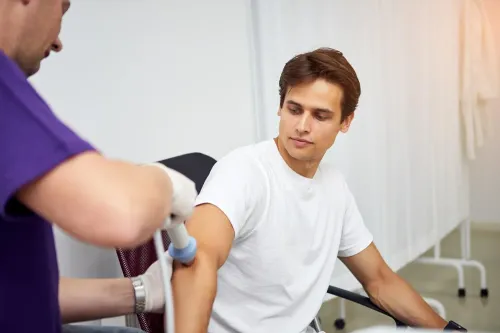
The examination usually checks elbow and wrist range of motion, resisted wrist and finger extension, grip, forearm strength, and differences from the unaffected side. Neck and shoulder screening, sensation, reflexes, and nerve-strength testing become important when numbness, tingling, or unusual weakness is present.
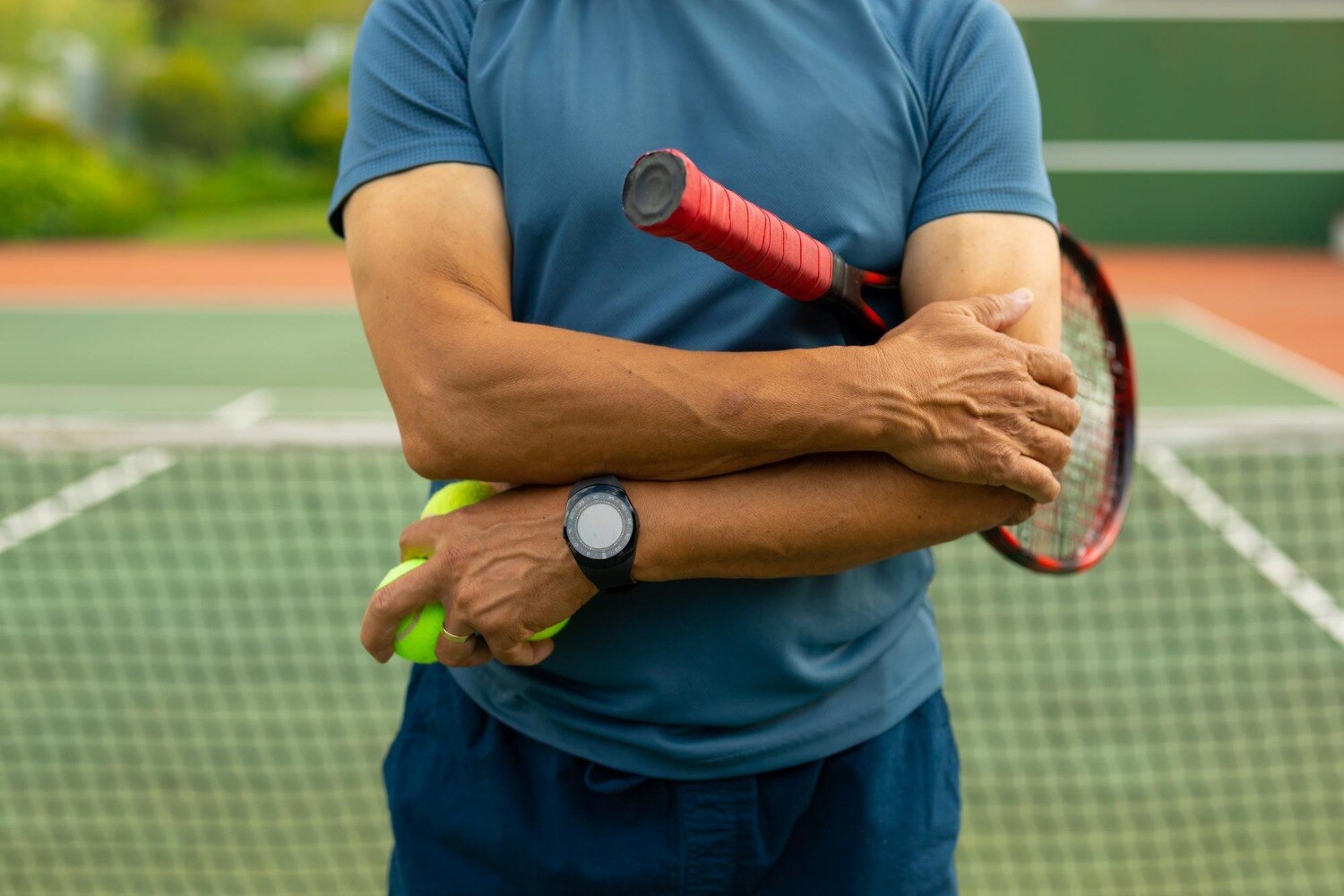
Lateral epicondylalgia, commonly called tennis elbow, is usually diagnosed clinically rather than through routine imaging.
| Condition | Findings that may point away from tennis elbow |
|---|---|
| Radial tunnel syndrome | Deep forearm pain, tenderness farther down the arm, or pain with resisted forearm movement |
| Cervical radiculopathy | Neck pain, radiating symptoms, altered sensation, reflex changes, or weakness in a nerve-root pattern |
| Shoulder or wrist disorder | Pain reproduced more clearly by shoulder or wrist testing than by elbow loading |
| Joint or inflammatory disease | Marked swelling, restricted motion, warmth, multiple painful joints, or prolonged morning stiffness |
| Tendon, ligament, or nerve injury | Major trauma, sudden weakness, a pop, or loss of normal hand function |
X-rays or MRI are considered after major trauma, marked weakness, unusual swelling, suspected arthritis or ligament damage, an acute tendon tear, or poor improvement. Seek medical review for fever or unexplained night pain. Ask what supports the diagnosis and what would trigger referral during tennis elbow physiotherapy or elbow pain physiotherapy.
What happens during the first appointment, and how should you change daily activities?
The first visit usually combines an interview, physical examination, diagnosis explanation, and initial treatment plan. Assessment and treatment commonly fit within one appointment, but ask the clinic for its exact appointment length when booking.
1. Wear a short-sleeved or loose top so the therapist can examine your arm, shoulder, and neck. Bring a medicines list, details of previous injuries or injections, relevant scan reports, and examples of work, sport, gym, or household tasks that provoke symptoms.
2. Expect questions about your daily load, followed by movement, strength, and grip checks. The therapist will explain whether the findings fit tennis elbow and agree on practical changes rather than prescribing complete rest or prolonged immobilisation.
3. Reduce the dose of aggravating tasks. Use a lighter pan, carry bags with both hands, alternate mouse and keyboard tasks, keep the mouse close, avoid sustained wrist extension, and take brief movement breaks.
4. For racquet sports, reduce duration, intensity, or frequency before returning to full play. In the gym, modify heavy curls, pull-ups, rows, deadlifts, and gripping exercises instead of stopping all activity.
5. Use your next-day response to guide progression. Pain that settles after the task and is no worse the following day is more useful than avoiding every sensation.
This relative-rest approach suits tennis elbow physiotherapy because the aim is to manage tendon load while preserving useful movement and capacity.
Which exercises are included, and how does tennis elbow rehabilitation progress?
Rehabilitation usually advances from tolerable contractions to the loads your work, sport, or home life demands. A typical sequence is:
| Stage | Exercise focus | Progress marker |
|---|---|---|
| Early | Wrist-extensor isometrics: hold the wrist steady against gentle resistance for several short repetitions | Pain remains controlled |
| Middle | Slow wrist extension and lowering with a dumbbell, resistance band, or cable | You control the full movement |
| Strength | Heavier concentric and eccentric work, plus grip loading | Daily symptoms stay stable |
| Task-specific | Lifting, keyboard work, cooking, manual tasks, or sport | The next-day reaction is acceptable |
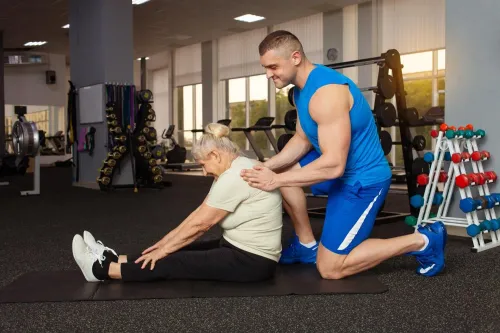
Forearm rotation prepares you for turning a screwdriver, opening a jar, or using a racquet. Grip work can move from a soft ball or rolled towel to firmer resistance, longer holds, and carrying tasks. Shoulder-blade conditioning, including controlled rowing and external-rotation exercises, addresses the full upper-limb load rather than isolating the elbow.
Your therapist chooses sets, repetitions, resistance, and frequency from your examination and response. Progress when the current load is controlled, symptoms are stable through the day, and the next morning is no worse. A tennis elbow physiotherapy programme targets your actual exposure, whether that means occupational gripping, mouse use, lifting, or racquet sport.
Pain is not the only measure. Grip strength, pain during a named task, work or sport capacity, and the Patient-Rated Tennis Elbow Evaluation can show whether function is improving. If you search for “tennis elbow for treatment physiotherapy clinic,” look for measurable progression rather than exercise sheets alone.
How are manual therapy, taping, braces, heat, and ultrasound used?
Hands-on treatment can mobilise the elbow joint, radial head, wrist, or nearby soft tissues, sometimes while you perform an active movement. Depending on the examination, the therapist may treat the wrist-extensor muscle-tendon region and surrounding forearm tissues. Pressure, stretching, or a temporary movement change is normal; severe or lingering pain is not.
Manual therapy may briefly reduce pain or improve movement so exercise feels easier, but it is rarely the complete elbow pain physiotherapy plan.
| Option | Main purpose | Important limit |
|---|---|---|
| Counterforce elbow strap | Reduce symptoms during gripping or lifting | Benefit varies; it must not hide excessive loading |
| Wrist-support brace | Limit painful wrist motion during a provoking task | Check fit, wearing time, skin irritation, and whether it delays strengthening |
| Taping | Provide temporary support or symptom relief | It does not rebuild tendon capacity |
| Heat | Make movement more comfortable before activity | It does not increase tendon capacity by itself |
| Ice | Settle symptoms after a flare | It does not correct the cause or replace rehabilitation |
| Therapeutic ultrasound, laser, shockwave therapy, or dry needling | Add-on treatment selected for a specific reason | Evidence and suitability differ; none replaces load management and exercise |
Ask what measurable purpose each treatment serves, how it will be assessed, and when you will reduce or stop it. A brace that makes lifting painless can tempt you to exceed the tendon’s current capacity. Progress still depends on appropriately increasing exercise and task load.
How do you know the plan is working, and what should you check when choosing a clinic?
A useful plan reviews progress instead of repeating identical sessions. Your physiotherapist should reassess pain during a named task, grip strength, elbow and wrist movement, daily function, and your ability to resume work, household activity, gym training, or racquet sport.
| Measure | Evidence of progress | What to reassess |
|---|---|---|
| Pain | Less pain while lifting a mug or using a mouse | Same named task |
| Grip strength | Stronger grip without a next-day flare | Both hands |
| Movement | Greater elbow and wrist range | Side-to-side comparison |
| Function | More work, home, gym, or sport capacity | Patient-Rated Tennis Elbow Evaluation |
Recovery can take months. A workload-related fluctuation does not automatically mean treatment has failed, but repeated deterioration needs review.
Seek medical review for:
- Numbness or progressive weakness
- Major swelling or fever
- Unexplained night pain
- Pain after major trauma
Ask for referral if the diagnosis remains uncertain or substantial disability persists despite a well-delivered programme. Surgery is usually reserved for a carefully diagnosed case that remains disabling after roughly six to twelve months or longer of non-operative care, not pain lasting a few weeks.
When searching for tennis elbow treatment near me or comparing elbow pain physiotherapy, check for an individual examination, progressive strengthening, task modification, outcome measurements, and a referral pathway.
Someone comparing a physiotherapy clinic in Faridabad can use these standards when assessing Kaushik Physio Clinic or another provider; proximity matters less than examination-led care and regular progression reviews.
Related service
Orthopedics Physiotherapy ₹500 Outer Side of Elbow Pain Not Able To The Kitchen Work During Desktop Work Pain In Lifting objects View service → |
Frequently asked questions
How does a physiotherapist confirm tennis elbow and rule out other causes?
They review when the pain began, recent workload or training changes, aggravating movements, and symptom spread. They then examine elbow tenderness, wrist and finger resistance, grip, neck, shoulder, and nerve function to assess whether another condition explains the pain.
What happens during the first tennis elbow physiotherapy appointment?
The physiotherapist takes your history, examines movement and strength, identifies painful activities, and sets an activity plan. You may be asked to reduce painful gripping or lifting while keeping comfortable arm movement.
Which exercises are included in tennis elbow rehabilitation?
Treatment commonly progresses from gentle wrist and forearm movement to isometric loading, slow strengthening, and functional exercises. The physiotherapist adjusts repetitions and resistance according to pain response and grip function.
How are manual therapy, taping, braces, heat, and ultrasound used?
These tools support comfort or movement when they suit your assessment. They do not replace progressive exercise and activity changes. A brace or tape may reduce strain during selected tasks, while heat can help stiffness.
How do you know whether tennis elbow treatment is working?
Track pain during gripping, lifting, and wrist movement, along with grip strength and tasks such as opening jars or carrying objects. Improvement means you can do more with less pain and recover faster after activity.