

Outer-elbow pain after gripping, backhand strokes, climbing or lifting is not always tennis elbow, and continuing to train through worsening pain can delay recovery. You will learn how to recognise the usual symptom pattern, identify warning signs, adjust training, compare treatment options and judge when your elbow is ready for full sport.
Key takeaways
- Outer-elbow tenderness with gripping often points to lateral elbow tendinopathy.
- Reduce aggravating loads instead of automatically stopping all activity.
- Rehabilitation progresses from pain control to strengthening and sport-specific drills.
- Return when strength, movement and tennis tasks match your uninjured side.
Is your outer-elbow pain tennis elbow or another injury?
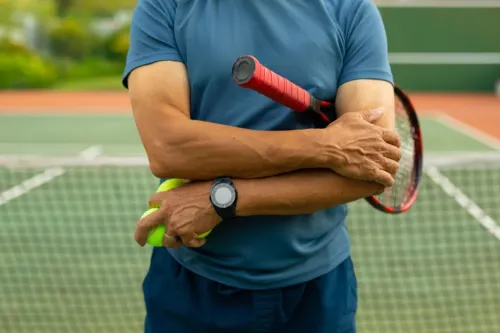
Outer-elbow pain is more likely lateral elbow tendinopathy when it is tender over the outer bony prominence and worsens with gripping, backhand strokes, lifting or resisted wrist extension. It usually develops from repeated loading rather than one dramatic incident.
| Condition | Clues that separate it |
|---|---|
| Lateral elbow tendinopathy | Focal tendon tenderness; pain with gripping or lifting; gradual onset |
| Radial tunnel syndrome | Deep aching farther down the forearm, often 3–5 cm below the elbow; pain with forearm rotation or resisted middle-finger extension |
| Ligament injury | Pain after a fall, forceful twist or elbow instability; swelling or a feeling that the joint will give way |
| Muscle-tendon strain | Sudden pain during a sprint, lift or forceful stroke, followed by tenderness in the muscle or tendon rather than directly at the elbow |
| Neck-referred pain | Neck movement changes the arm pain; symptoms travel down the arm or include pins and needles, altered reflexes or weakness |
Do not start routine athlete elbow pain treatment after a major fall or direct blow if the elbow is deformed, locked, markedly swollen, hot or red. Seek medical assessment for fever, sudden major weakness, numbness, severe resting pain or unexplained symptoms; these signs can indicate fracture, infection or nerve involvement.
A physiotherapist should examine your neck, shoulder, wrist and nerve function before labelling the problem tennis elbow.
Which training habits raise the risk, and should you stop playing?
Pain that worsens after gripping, backhand strokes or lifting usually signals that the elbow is receiving more load than it can currently tolerate. A tight grip, late contact, excessive wrist action, high racquet vibration, poor shoulder rotation and a sudden increase in sessions or intensity all raise tendon stress.
Heavy curls, deadlifts or carrying loads can add the same problem.
- Reduce the stroke, grip pressure, lifting weight, training volume or intensity that provokes symptoms.
- Keep pain-free conditioning, footwork and lower-body training so you do not become completely inactive.
- Check recovery after racquet changes, extra matches, harder serves or a rapid return after time off.
- Arrange sports injury physiotherapy if pain persists, affects daily tasks or keeps worsening despite load reduction.
Continue, modify or stop training according to the response:
| Decision | What to do | Sign you are choosing correctly |
|---|---|---|
| Continue | Train at reduced or usual load | Pain stays mild, technique remains controlled and the elbow is no worse the next morning |
| Modify | Cut provoking strokes, gripping or lifting and use longer recovery | Symptoms settle during the session and return to baseline within 24 hours |
| Stop and seek assessment | Stop the painful activity immediately | Sudden weakness, numbness, major swelling, deformity, lost motion or pain after a fall appears |
Do not use pain relief to push through steadily worsening symptoms. A physiotherapist providing tennis elbow physiotherapy can measure grip and wrist strength, review your technique and build progressive loading from controlled wrist-extensor work to sport-specific racquet tasks.
What happens during assessment and rehabilitation?
Pain during gripping is only one part of the assessment. A proper physiotherapy examination should test:
- Neck and shoulder movement, posture and the whole kinetic chain
- Elbow and wrist range of motion, grip strength and resisted wrist extension
- Nerve function, including sensation and strength supplied by the radial nerve
- Backhand, serve, lifting technique, racquet demands and recent training volume
The clinician should record a baseline, such as grip force or pain during a specific task, then repeat it to measure change. Imaging is not required for every case.
An X-ray is useful after a fall or when bone or joint disease is suspected; ultrasound or MRI can help when symptoms are severe, recovery is stalled, weakness suggests a substantial tendon injury, or the diagnosis remains uncertain.
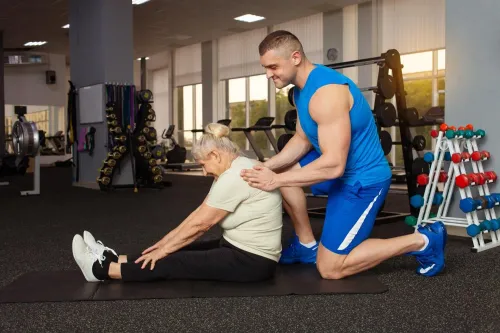
Progressive tennis elbow exercises rebuild capacity rather than simply chasing pain relief. A typical sequence is:
- Begin with comfortable isometric wrist-extensor holds when the tendon is highly irritable.
- Progress to slow resisted wrist and forearm work, using both lifting and lowering phases.
- Add grip loading, heavier functional tasks and sport-specific racquet movements.
- Increase resistance, repetitions or hitting volume only when symptoms during exercise and the following morning remain acceptable.
The programme must match your response, not a preset routine. This is what to look for when choosing tennis elbow physiotherapy in Faridabad: measurable loading, technique review and repeated strength and function testing.
How should you compare braces, injections, shockwave therapy and physiotherapy?
Braces and injections can reduce pain quickly, but relief is not the same as a stronger tendon. Progressive physiotherapy targets load tolerance, gripping capacity and the movement demands of your sport, making it the strongest option for lasting improvement when the diagnosis is correct and the programme is followed.
| Option | Likely benefit | Main limitation |
|---|---|---|
| Braces | Reduce painful wrist or elbow loading during play and daily tasks | Symptom support only; they do not restore strength or correct training errors |
| Corticosteroid injection | Often gives rapid short-term pain relief | Higher recurrence and poorer longer-term outcomes; it can encourage premature return |
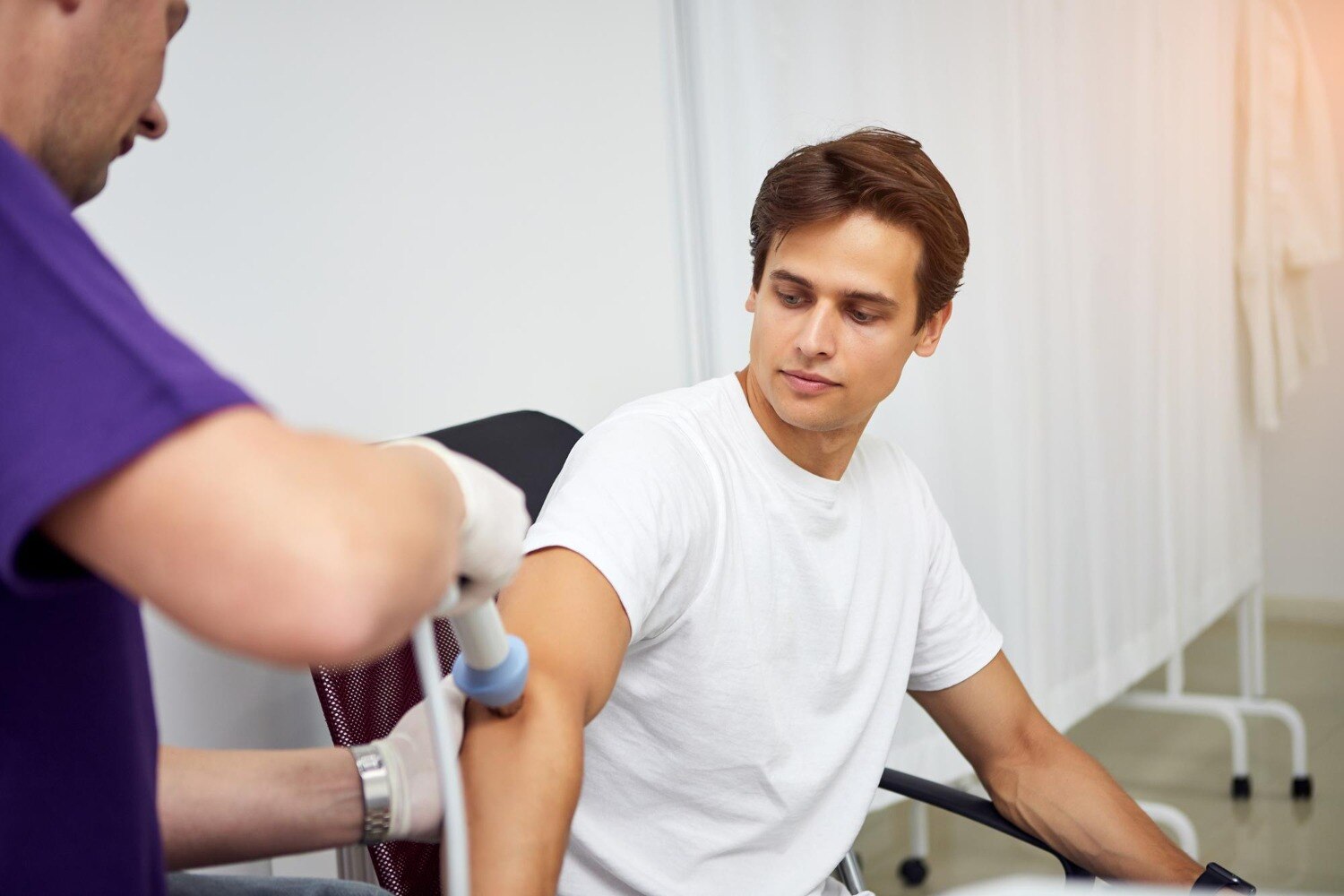
| Shockwave therapy | May reduce persistent pain and support rehabilitation in selected chronic cases | Results vary by protocol and diagnosis; treatment can be uncomfortable and does not replace loading |
| Physiotherapy | Builds wrist, forearm and grip strength through graded exercises and sport-specific progression | Requires several weeks of consistent work and adjustment to your next-day response |
Choose tennis elbow treatment in Faridabad by the plan, not by a machine, package or promise of rapid recovery. Look for a clinician who will:
- Examine your neck, shoulder, wrist, nerves and whole kinetic chain.
- Review racquet technique, grip, training volume and recovery.
- Set measurable loading targets, then reassess strength and sport function.
- Explain when imaging or medical referral is needed.
At Kaushik Physio Clinic, ask how the clinician will progress you from tolerable isometric loading to slow forearm strengthening, gripping and racquet-specific work rather than prescribing a fixed “tennis elbow exercises” routine. Pain during exercise, later that day and the next morning should guide progression.
Related service
Orthopedics Physiotherapy ₹500 Outer Side of Elbow Pain Not Able To The Kitchen Work During Desktop Work Pain In Lifting objects View service → |
When is an athlete ready to return to full competition?
Full competition is appropriate when function, not a calendar, shows that the elbow tolerates sport. You should have near-full elbow and wrist movement, comfortable resisted wrist-extension and grip testing, and no meaningful increase in pain or stiffness the following morning.
| Checkpoint | Ready to progress | Hold or reassess |
|---|---|---|
| Motion | Near-full elbow, wrist and forearm movement | Loss of movement or pain at end range |
| Strength | Grip and wrist-extension strength close to the uninjured side | Sudden weakness or a clear side-to-side deficit |
| Practice load | Completes serving, backhands, lifting, throwing or climbing drills | Pain escalates during drills or changes technique |
| Recovery | Symptoms settle to baseline by the next morning | Next-day flare, swelling or reduced grip |
Move from modified practice to full competition in stages: increase speed, volume and competitive intensity separately. A brace can reduce symptoms during this transition, but relying on it while strength remains limited does not prove readiness.
Persistent pain that blocks progression after a measured loading plan warrants reassessment, not simply more training. A sports injury physiotherapy review should recheck the neck, shoulder, wrist, nerves, technique and training load; seek medical referral for major swelling, deformity, fever, numbness, sudden weakness, marked motion loss or pain after a fall.
An athlete elbow pain treatment plan also needs review if symptoms repeatedly return after competition.
Frequently asked questions
How can athletes tell tennis elbow from another elbow injury?
Lateral elbow tendinopathy causes tenderness over the outer bony prominence and pain with gripping, backhand strokes, lifting or resisted wrist extension. Sudden trauma, major swelling, locking, numbness or loss of movement needs a clinical assessment for other injuries.
Should you stop playing if you have tennis elbow?
Stop or modify the strokes and exercises that clearly increase pain, especially repeated backhands and forceful gripping. Keep pain-free conditioning and follow a graded load plan rather than resting completely without guidance.
What happens during tennis elbow physiotherapy?
A physiotherapist checks elbow and wrist movement, grip strength, shoulder and technique factors, then builds a programme of progressive tendon loading, mobility work and sport-specific drills. The plan is adjusted according to symptoms and performance.
How do braces, injections, shockwave therapy and physiotherapy compare?
A brace can reduce strain during activity but does not rebuild capacity. Injections may provide short-term relief but require medical advice and do not replace rehabilitation. Shockwave therapy is an additional option for selected persistent cases, while physiotherapy targets load management, strength and return to sport.
When can an athlete return to full competition?
Return when daily activity and tennis drills are pain-controlled, elbow and grip strength are close to the uninjured side, and full-intensity practice does not cause a lasting symptom flare. Increase match exposure in stages before full competition.