
Stiffness 12 to 24 hours after an unfamiliar or unusually hard workout is often delayed-onset muscle soreness, but sharp pain, bruising, weakness, swelling or dark urine points to a different problem. You will learn how to manage ordinary soreness, identify warning signs and decide when an assessment can improve your return to training.
Key takeaways
- DOMS usually peaks between 24 and 72 hours after unfamiliar exercise.
- Use gentle movement, hydration and rest during the first 72 hours.
- Seek assessment for sharp pain, swelling, weakness or symptoms lasting beyond five days.
- A physiotherapist can check movement, strength and exercise technique before progressing your training.
Why Your Muscles Feel Stiff After a Gym Session
Post-workout stiffness is usually normal when it follows unfamiliar or unusually intense exercise. Delayed-onset muscle soreness (DOMS) commonly starts 12 to 24 hours later, peaks around 24 to 72 hours and settles within roughly 3 to 5 days.
DOMS is linked to eccentric loading, especially the lowering phase of squats, lunges, deadlifts and biceps curls. A sudden increase in sets, repetitions or weight also raises the likelihood. Effective post exercise pain treatment starts by identifying this pattern rather than assuming every ache needs aggressive treatment.
| Feature | Typical DOMS | Possible injury |
|---|---|---|
| Timing | Begins after 12–24 hours; peaks by 24–72 hours | Sudden pain during or immediately after exercise |
| Location | Trained muscles on both sides | Pinpoint pain near one muscle, tendon or joint |
| Sensation | Sore, tight and gradually easier with movement | Sharp pain, a pop, worsening pain or measurable weakness |
| Visible or functional signs | No major swelling; normal walking remains possible | Bruising, major swelling, joint locking, numbness or inability to bear weight |
| Likely concern | Temporary exercise-related muscle stress | Strain, tendon or joint problem, or nerve involvement |
Gym stiffness physiotherapy assessment is sensible when symptoms stay focal, restrict movement or fail to improve within the DOMS window. Seek urgent medical care for profound weakness, marked swelling, inability to perform normal movement or dark tea- or cola-coloured urine, which can signal rhabdomyolysis rather than ordinary soreness.
What to Do During the First 72 Hours of Stiffness
For post workout stiffness treatment in Faridabad, begin with active recovery rather than bed rest or another hard session for the same muscles. During the first 72 hours, use this checklist:
- Walk lightly or cycle easily for 5 to 15 minutes.
- Move the affected joints gently through a comfortable range; stop before sharp pain.
- Reduce the painful exercise temporarily instead of immobilising the area.
- Eat normal meals, drink enough fluids, and aim for adequate sleep.
- Resume loading gradually when everyday movement feels easier.
Heat can make stiffness and movement feel better, while cold can reduce pain. Neither reliably speeds DOMS recovery, so use either only for comfort, protect your skin, and limit exposure if numbness develops.
Static stretching is not a dependable cure. Forceful stretching or aggressive foam rolling can aggravate a swollen area or a suspected tear; if you roll, keep pressure tolerable and avoid injured tissue.
Improving DOMS should settle within 3 to 5 days. Book an assessment if symptoms last beyond that window, repeatedly follow one movement, or cause measurable strength loss. Those patterns can indicate a strain, tendon problem, joint disorder or nerve irritation rather than ordinary soreness.
Seek urgent medical care for dark tea- or cola-coloured urine, marked swelling, profound weakness, or inability to perform normal movement. Do not delay for massage or a routine physiotherapy appointment, because these signs can indicate rhabdomyolysis or a serious injury.
When a Faridabad Physiotherapy Assessment Adds Value
Stop guessing when pain is focal, the same lift repeatedly triggers it, movement stays restricted, or strength has fallen. If symptoms are not improving after the usual three-to-five-day DOMS window, book an assessment rather than labelling them post-workout stiffness.
A search for post gym workout stiffness for physiotherapy clinic in faridabad should lead to examination, not automatic massage.
| Situation | What it suggests | Next step |
|---|---|---|
| Improving, symmetrical muscle soreness | Likely DOMS | Continue sensible recovery and gradual loading |
| Focal or recurring pain, restricted movement, reduced strength | Strain, tendon, joint or nerve problem | Book a physiotherapy assessment |
| Dark tea-coloured urine, marked swelling, profound weakness or inability to move normally | Possible rhabdomyolysis or serious injury | Seek urgent medical care, not a routine appointment |
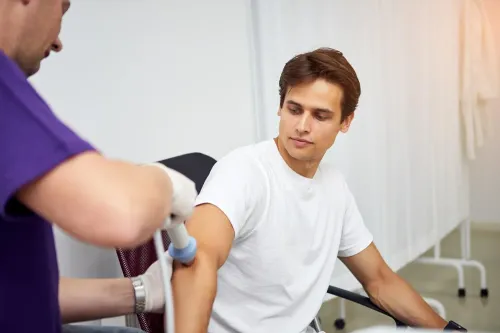
The physiotherapist asks when symptoms began, their exact location and behaviour, and whether pain changes with rest or movement. They review recent exercises, sets, repetitions, weight, training frequency, recovery, previous injuries, medicines and relevant medical conditions.
They watch your lifting mechanics or gait, measure joint range of motion and strength, then use joint-specific tests to identify the affected tissue. This is more useful than choosing a muscle stiffness physiotherapy clinic by treatment name alone.
Kaushik Physio Clinic in Faridabad can use these findings to choose graded rehabilitation, medical referral or a modified training plan instead of a standard passive-treatment package. That decision matters when treating the cause determines whether you return safely to training.
Related service
Physiotherapy Post Gym Workout Stiffness Treatment ₹500 Stiffness and Pain Lack of Mobility Deadlift View service → |
What Gym Stiffness Physiotherapy Usually Involves
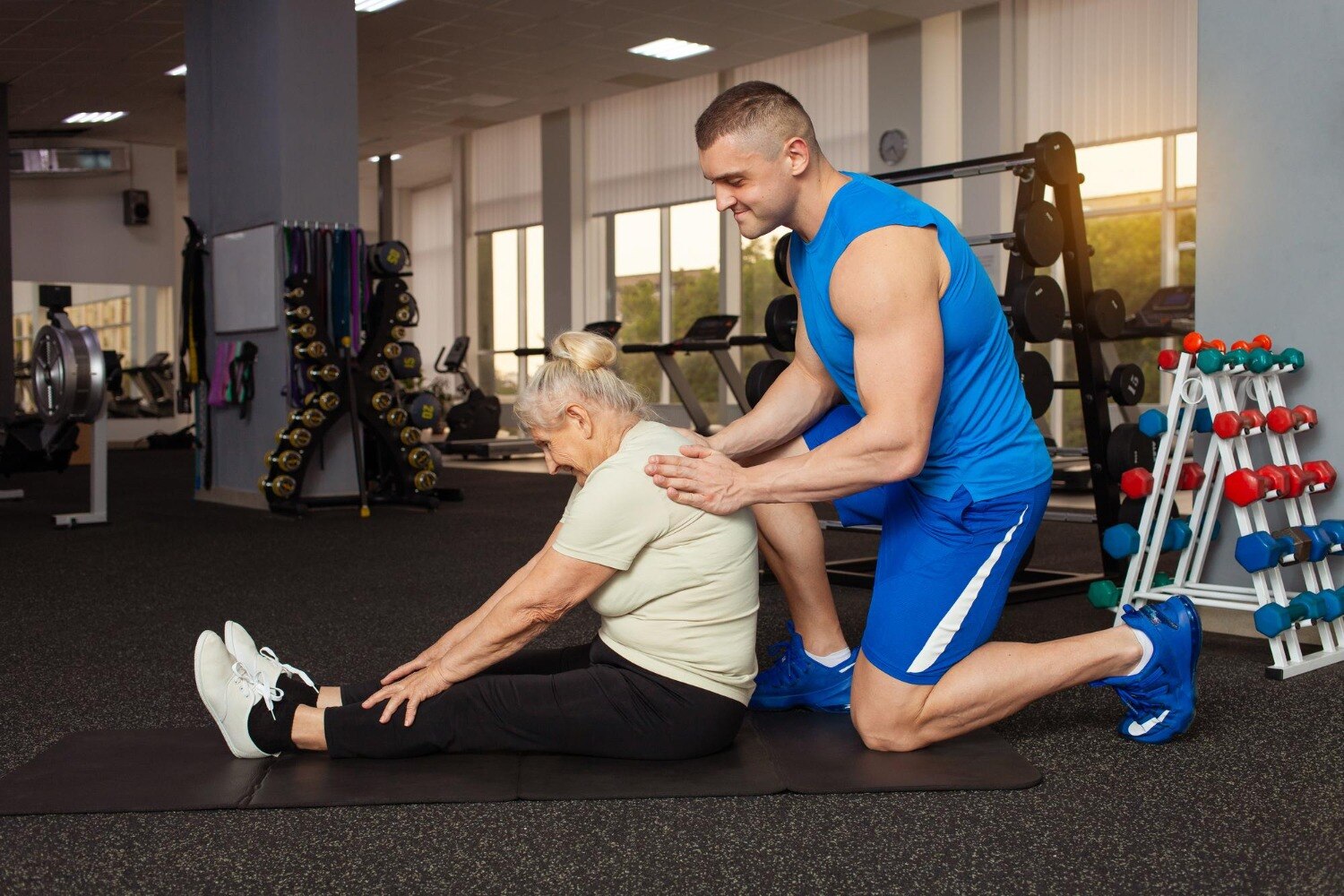
Treatment usually starts with an initial assessment of symptom behaviour, joint range, strength, movement quality and lifting mechanics. Those findings set the plan; gym stiffness physiotherapy is not a massage-only package.
A muscle stiffness physiotherapy clinic may include:
- Graded mobility to restore comfortable movement without forcing a painful range.
- Targeted strengthening for weak or poorly conditioned muscle groups.
- Movement retraining and lifting-technique correction for squats, hinges, lunges, presses or pulls.
- Load management that adjusts weight, sets, repetitions, speed and training frequency.
- A written home exercise programme with short sessions on most days.
Massage can modestly reduce perceived soreness for a short time, but it does not immediately restore performance or repair exercise-related tissue stress. Use it as an adjunct, not the complete plan. Foam rolling can provide short-term comfort or range-of-motion gains when pressure remains tolerable; avoid aggressive pressure over swelling, acute injury or a suspected tear.
Expect follow-up appointments based on your strength and movement findings, not a fixed package of identical treatments. Progression should occur when daily movement and test exercises improve, then weight, volume, speed and training frequency increase in stages. Heat or massage can mask symptoms without restoring capacity, so they are not permission to resume heavy training.
You will need consistent home practice and patience rather than one passive session.
How to Prepare and Prevent the Next Episode
Make the appointment useful by bringing the information that explains what changed, not just where you hurt. This turns post exercise pain treatment into a decision based on your training and examination findings.
- Bring your exercise list, recent weights and repetitions, training frequency, dates of training changes, and the exact time symptoms began.
- Note previous injuries, relevant medical conditions, and medication details that affect treatment safety.
- When safe, record a short video of the exercise from the side and front. Stop filming if the movement increases pain or feels unstable.
- Ask for a plan that addresses loading, movement, strength and recovery rather than relying only on massage or heat.
Prevent repeat stiffness through progressive loading. Increase weight, sets, repetitions or training frequency in small steps instead of making sudden jumps. Warm up by rehearsing the movements and ranges used in the session, allow adequate recovery between hard sessions, sleep consistently, and strengthen poorly conditioned muscle groups.
Disclose kidney disease, uncontrolled hypertension, diabetes-related complications, bleeding risk, pregnancy or significant cardiovascular disease before intensive exercise, heat, supplements or over-the-counter pain medicines. Medication choices and suspected systemic illness may require a physician.
Improving, symmetrical soreness needs sensible recovery. Persistent or worsening symptoms need examination. Dark urine, profound weakness, marked swelling, faintness, chest symptoms or other systemic warning signs need urgent medical care.
Frequently asked questions
How long does post-gym muscle stiffness usually last?
Delayed-onset muscle soreness usually begins 12 to 24 hours after exercise, peaks within 24 to 72 hours and settles within roughly 3 to 5 days.
What should you do during the first 72 hours of gym stiffness?
Use gentle movement, avoid repeating the painful high-intensity exercise, and monitor your symptoms. Seek medical advice for severe pain, marked swelling, sudden weakness or dark urine.
When should you get a physiotherapy assessment for gym stiffness?
Book an assessment when pain is sharp, one-sided, worsening, affecting normal movement, recurring after training or not improving after about five days.
What does gym stiffness physiotherapy involve?
A physiotherapist reviews your symptoms, training load and movement, then checks mobility, strength and technique before recommending targeted exercises and a gradual return to training.