
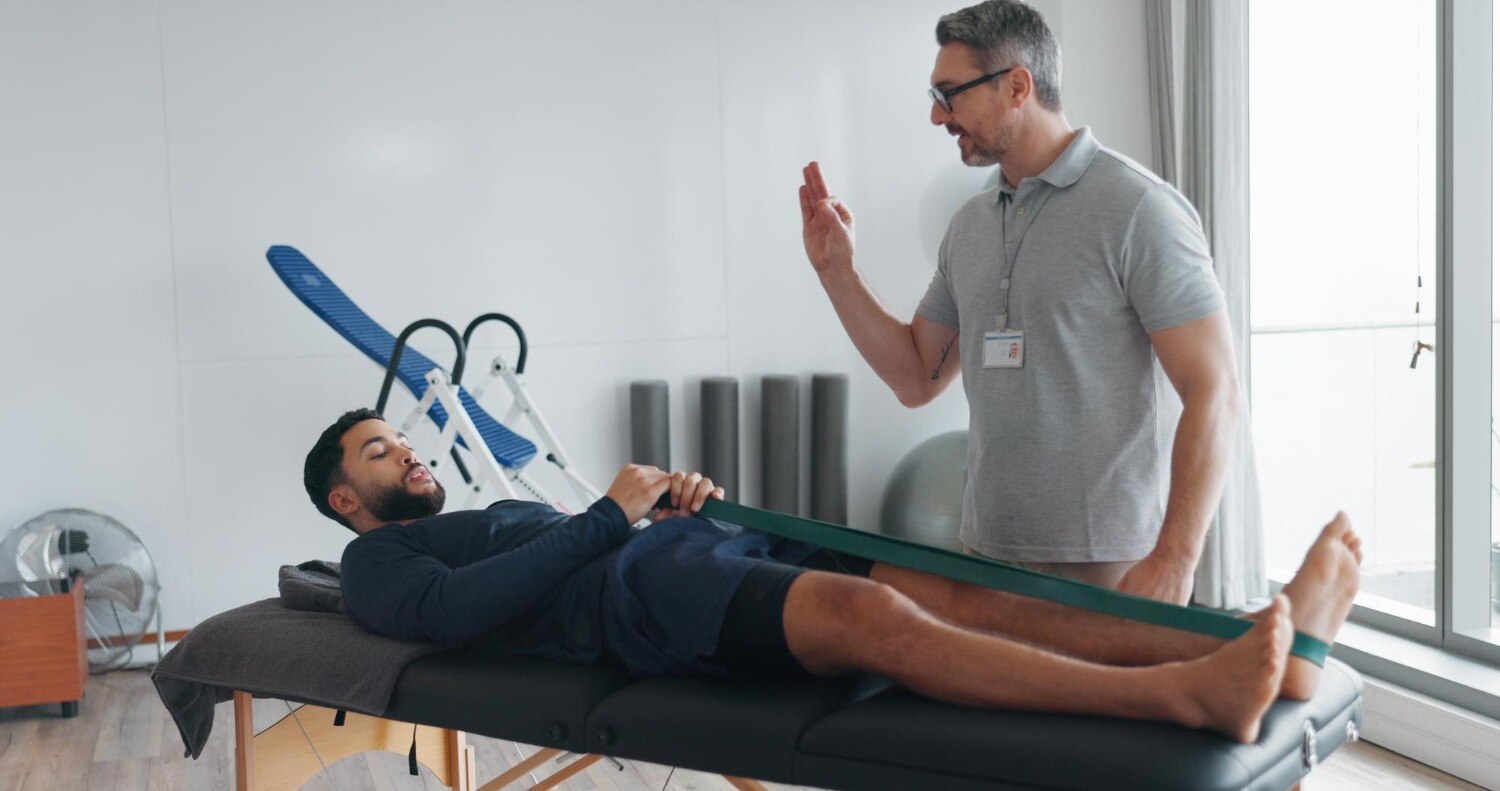
Stiffness after a hard or unfamiliar workout is often delayed-onset muscle soreness, but sudden sharp pain, swelling, weakness or dark urine changes the decision completely. You will learn how to identify the likely cause, choose between movement, hands-on care and recovery measures, and judge when a physiotherapy assessment is safer than self-treatment.
Key takeaways
- DOMS starts 12–24 hours after exercise, peaks within 72 hours, then improves.
- Sharp pain, swelling, weakness or altered movement suggests a gym injury.
- The first session should assess movement, strength, joints, tendons and training technique.
- Keep gently moving for DOMS; seek assessment when symptoms worsen or persist.
Is this normal muscle soreness or a gym injury?
Most post-workout stiffness is delayed-onset muscle soreness (DOMS), so you can manage it with relative activity when it follows the usual pattern. DOMS usually begins 12–24 hours after unfamiliar or high-intensity exercise, peaks at about 24–72 hours, and improves over several days.
Treat it as a possible gym injury and seek assessment if you notice:
- Pain that starts suddenly during a lift, stays sharp and localised, or follows a specific incident
- Bruising, significant swelling, joint instability, locking, limping, numbness, weakness, or clear loss of function
- Stiffness that persists beyond the expected several-day DOMS pattern or repeatedly follows ordinary workouts
- Neurological symptoms, such as pins and needles, altered sensation, or weakness
Seek urgent medical care rather than a routine post gym stiffness physiotherapy appointment if swelling is rapidly increasing, muscle pain is severe and widespread, urine is very dark, urination is greatly reduced, or you develop fever or unusual weakness after extreme exercise. These signs can indicate a serious muscle injury or rhabdomyolysis.
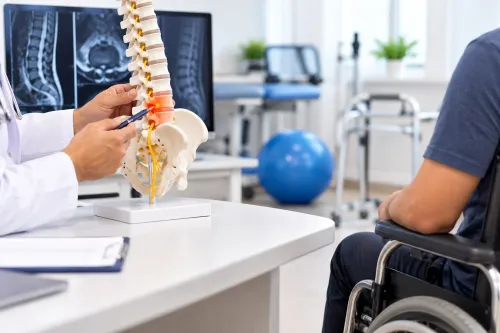
If symptoms keep returning, limit your strength or movement, or fail to settle, stop repeating self-treatment. A physiotherapist or doctor can identify whether the problem involves muscle, tendon, joint or nerve tissue and guide a safe return to training.
What should the first physiotherapy session actually assess?
A useful first session links your symptoms to a specific exercise error or injury risk, then tests what your body can safely do.
Expect questions about the exercise, load, repetitions, range of motion, training to failure, symptom timing, sleep, food, hydration, recovery days and previous injuries. Tell the clinician whether stiffness began during the workout or later, and whether the same problem follows ordinary sessions.
The physical assessment may include:
- The painful movement, joint range and muscle strength
- Balance, lifting technique and control under light load
- Signs of tendon, joint, nerve or muscle injury
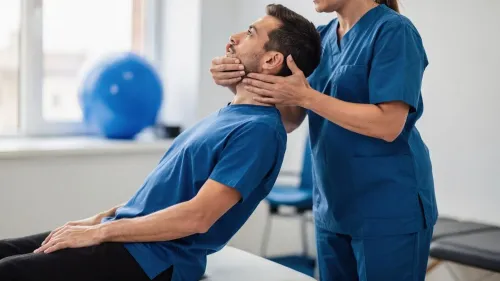
The findings determine whether you need active recovery, gentle mobility, therapeutic exercise or a temporary reduction in load. Manual therapy or massage can improve comfort briefly, but they are add-ons rather than repairs.
A first appointment often includes your history, physical assessment and initial treatment. Duration depends on complexity. You should leave with a home plan, clear limits for training and a reassessment point—not a promise of a fixed number of visits.
A machine treatment alone is not automatically the best physiotherapy clinic post workout stiffness for treatment. Ultrasound or electrotherapy should have a stated purpose and support an active plan; treating soreness with a passive machine without checking strength, movement and training load misses the cause.
Which treatment fits squats, deadlifts, joints, tendons and low-back pain?
Choose treatment by the painful tissue and the workout that triggered it, not by soreness alone.
| Pattern | Best starting approach | Avoid or check |
|---|---|---|
| Widespread thigh or glute soreness after squats or deadlifts | Relative activity, easy walking or cycling, gentle range of motion, and temporarily less load, volume or eccentric work | Stop if movement quality worsens or next-day pain increases |
| Joint stiffness | Controlled joint mobility followed by progressive strengthening | Screen for swelling, locking or instability |
| Tendon pain | Gradual, symptom-monitored strengthening | Do not repeatedly load the tendon to failure |
| Low-back pain | Assess the painful movement, leg symptoms, strength and lifting technique | Do not assume it is muscle soreness |
| Delayed soreness after an unfamiliar workout | Restore activity gradually and adjust the dose by movement quality and next-day response | Avoid returning immediately to the same high volume or failure training |
The right physiotherapy for gym soreness uses gentle mobility to maintain movement, but forceful static stretching that increases pain can aggravate symptoms. Stretching is not a reliable cure for delayed-onset muscle soreness.
Heat can briefly ease stiffness; avoid it over acute swelling. Cold can reduce pain perception, but protect your skin from prolonged or extreme temperatures. Neither replaces a graded strengthening plan or assessment when symptoms persist, recur after ordinary workouts, or limit strength and function.
Should you rest, stretch, roll, massage or keep moving?
For uncomplicated DOMS, choose relative activity over complete rest. Walk, cycle easily, or move the affected joints while avoiding severe pain and any worse pattern the next day.
| Option | What it does | Main limitation |
|---|---|---|
| Easy movement | Maintains motion while soreness settles | Reduce load, volume and eccentric work temporarily |
| Gentle mobility | Preserves available joint range | Do not force painful positions |
| Foam rolling or massage | May briefly reduce perceived soreness and improve flexibility | Does not repair injury or replace rehabilitation |
| Forceful static stretching | Produces a stretch sensation | Has little clinically important effect on soreness over 24–72 hours |
| Physiotherapy treatment | Assesses pain, weakness, joint or nerve signs and guides progressive exercise | More useful when symptoms persist, recur or limit function |
Massage has stronger support for short-term soreness relief than for restoring performance. A physiotherapist can combine mobility, strengthening, load adjustment and manual therapy when needed; passive treatment alone is not a complete recovery plan.
A personal trainer can change exercise selection, technique and training volume. A physiotherapist is better placed to assess sharp pain, weakness, joint swelling, locking, instability, nerve symptoms and injury risk. Do not take pain relief to train through sharp pain or increase the load because masked symptoms can worsen an injury.
Drink enough fluid and eat enough total food and protein to support recovery, but neither is an instant cure. Book a clinic assessment when stiffness persists beyond several days, returns after normal sessions, or limits strength or function.
How do you choose an exercise stiffness treatment in Faridabad?
Choose an assessment-led clinic, not a branded package, if you want useful exercise stiffness treatment in Faridabad. The clinician should identify the training error, screen for injury and set measurable progress back to the gym using pain during a named movement, joint range, strength, lifting technique and your following-day response.
| Option | What it should involve | When it fits |
|---|---|---|
| Active recovery | Easy walking, cycling or reduced training load | Widespread soreness without injury signs |
| Mobility | Controlled, pain-limited joint movements | Stiffness that restricts a specific range |
| Strengthening | Gradual loading with technique and next-day monitoring | Weakness, recurring symptoms or reduced gym capacity |
| Manual therapy | Short-term comfort alongside exercise | Symptoms limit movement or exercise participation |
| Passive modality | A clear reason for ultrasound or electrotherapy, linked to the active plan | Only when it addresses a defined impairment |
A post workout recovery clinic should explain why it recommends any machine; soreness alone is not a reason to use one. At Kaushik Physio Clinic, judge the service by whether the clinician personalises assessment, home exercises and load progression for your symptoms, not by the recovery package name.
Many uncomplicated cases need a small number of appointments plus home exercises before reassessment. Suspected injury, rapidly increasing swelling, dark urine, severe weakness or neurological symptoms require medical referral or urgent care rather than routine treatment.
Related service
Physiotherapy Post Gym Workout Stiffness Treatment ₹500 Stiffness and Pain Lack of Mobility Deadlift View service → |
Frequently asked questions
How can you tell normal muscle soreness from a gym injury?
DOMS usually begins 12–24 hours after unfamiliar or intense exercise, peaks at 24–72 hours and improves over several days. Sharp pain, swelling, bruising, sudden weakness or changed movement points to an injury.
What should a first physiotherapy session assess for post-workout stiffness?
The assessment should review your symptoms, training load, movement patterns, joint range, muscle strength, tendon and joint irritation, balance, and relevant squat, deadlift or lifting technique.
Which physiotherapy treatment fits squats, deadlifts, joint pain, tendon pain and low-back stiffness?
Treatment depends on the affected tissue and movement pattern. It can combine exercise correction, graded strengthening, mobility work, manual therapy and load changes rather than using one treatment for every problem.
Should you rest, stretch, foam roll, massage or keep moving after exercise?
For typical DOMS, relative activity and gentle movement are usually more useful than complete rest. Use stretching, foam rolling or massage only if they feel comfortable, and stop if pain becomes sharp or symptoms worsen.
How do you choose an exercise stiffness treatment in Faridabad?
Choose a clinic that examines the cause, connects treatment to your training goals, explains a home programme and tracks strength, movement and symptom changes. Kaushik Physio Clinic provides personalised physiotherapy for gym-related and musculoskeletal recovery.