


Neck, shoulder, back or leg symptoms after computer work are not automatically a posture problem, and the right setting depends on your symptoms, mobility, workspace and treatment needs. By the end, you will know when home care is sensible, when a clinic or medical review is safer, what a first visit should include and how to judge whether treatment is working.
Key takeaways
- Choose home care first when symptoms are mild, stable, and movement-related.
- Ask the physiotherapist to screen symptoms before calling them posture pain.
- A home assessment should examine your desk, movement, strength, and daily routine.
- Choose clinic care when symptoms need equipment, close supervision, or broader assessment.
When Is Home Physiotherapy Safe for a Desk Worker?
Home physiotherapy clinic care for desk workers is suitable as a first step when your symptoms are mild to moderate, stable, linked to work or movement, and you can exercise safely. A physiotherapist should screen your current symptoms before labelling them ordinary posture pain.
Seek medical assessment instead of routine home exercise alone if you have:
- Pain radiating into an arm or leg
- New numbness or loss of strength
- Changes in walking, gait, or balance
- Fever or unexplained weight loss
- Significant trauma
- New bladder or bowel problems
- Numbness around the saddle area
- Severe, unremitting pain
Home care is practical when travel is difficult because of severe pain, recent surgery, reduced mobility, neurological impairment, or caregiving duties. A clinic is safer when you need substantial gym equipment, close guarding for high-load exercise, specialised neurological equipment, imaging, or a full functional assessment. Track computer tolerance and work participation, not temporary looseness.
Seek review if symptoms worsen, spread, cause weakness or numbness, or fail to improve with a progressed plan.
What Should a First Home Assessment Check?
A first home assessment should determine whether the pain comes from the neck, a nerve, the shoulder, or a condition needing medical review. Desk worker neck pain is more consistent with local muscle or joint pain when symptoms stay near the neck, movement is mildly limited, and strength, sensation, walking and balance are normal.
The physiotherapist should take a symptom history before prescribing exercises. Ask where pain travels, whether coughing or neck movement changes it, and whether headaches include nausea, light sensitivity, visual changes or throbbing; those features can point toward migraine-related pain rather than posture strain.
Check the shoulder separately, because painful overhead movement, a painful arc, weakness during resisted lifting, or restricted passive movement can indicate shoulder disease.
The home checklist should include:
- Measure neck movement and note whether it reproduces arm pain, tingling or numbness.
- Test reflexes, skin sensation and strength in both arms; compare grip, elbow and shoulder power.
- Check walking, balance and leg symptoms if the history suggests spinal or neurological involvement.
- Examine the shoulder’s active and passive range, strength and painful movements.
- Screen common entrapment sites, such as the carpal tunnel at the wrist and ulnar nerve at the elbow, when symptoms follow those nerve patterns.
- Observe typing, mouse use, reaching and sitting tolerance during the actual work setup.
Stop routine home exercise and arrange medical assessment for new weakness, spreading numbness, gait change, fever, major trauma, or new bladder or bowel symptoms. Reassess if symptoms worsen or fail to improve.
Can a Home Visit Fix the Workstation Problem?
A home visit can fix the workstation problem when the physiotherapist observes your actual laptop, monitor, chair, lighting and movement habits, then changes them alongside your exercise plan. Advice to “sit straight” misses the loads you repeat for hours.
| Item | Change to make | Why it helps |
|---|---|---|
| Laptop | Raise the screen to near eye level and use a separate keyboard and mouse | Reduces prolonged neck bending and cramped shoulder positioning |
| Monitor | Place it directly in front of you, about an arm’s length away, with the top near eye level | Limits repeated twisting, squinting and forward-head posture |
| Chair | Adjust the height so your feet rest flat and your hips are level with or slightly above your knees | Supports comfortable weight distribution without forcing one rigid posture |
| Keyboard and mouse | Keep them close, with relaxed shoulders and elbows near your sides | Reduces reaching and sustained shoulder tension |
| Lighting | Remove screen glare and place a light beside or behind the screen, not directly in your eyes | Prevents squinting and awkward leaning |
| Work routine | Change position every 30 to 45 minutes, walk briefly, and alternate tasks | Breaks up sustained loading better than holding “perfect” posture |
Posture correction alone is incomplete treatment for posture pain. Neck and upper-back strengthening, endurance work, mobility exercises and education address capacity, while physiotherapy can add manual treatment when appropriate. Track computer tolerance, neck movement, arm symptoms, sleep and work performance—not only temporary pain relief.
Should You Choose Home Visit Physiotherapy or a Clinic?
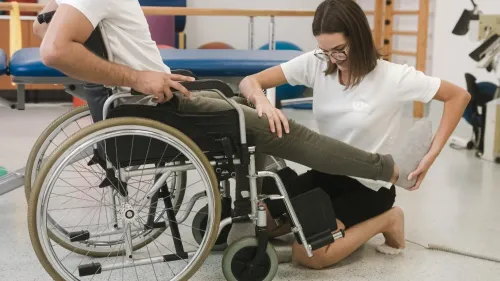
A desk worker who can travel and needs progressive strengthening will usually gain more from a clinic appointment. Home visit physiotherapy is the stronger choice when pain, recent surgery, neurological impairment, caregiving duties or limited mobility makes travel difficult, or when the workstation itself needs assessment.
| Option | Equipment and setting | Privacy and appointment | Travel effort | Exercise progression | Best fit |
|---|---|---|---|---|---|
| Home visit physiotherapy | Portable equipment; your chair, laptop, monitor, lighting and movement habits are assessed in context | Private and familiar, but household interruptions can shorten focus; time varies | No commute, parking or transfers | Starts with home exercises and can progress with bands, weights or bodyweight work | Uncomplicated neck, shoulder or back symptoms, workstation-related pain, or mobility-limiting recovery |
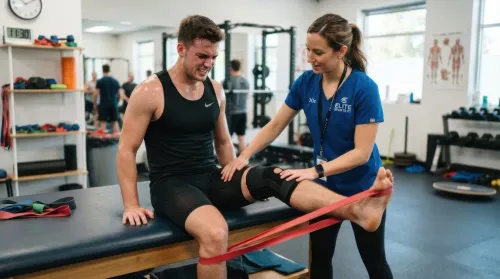
| Clinic appointment | Treatment plinths, graded resistance equipment, balance or gait space and closer guarding for demanding exercises | A dedicated treatment space; often supports a longer uninterrupted assessment | Requires transport and getting into the building | Easier to increase load, repetitions and task difficulty under supervision | Persistent weakness, post-surgical rehabilitation, neurological problems or goals requiring substantial equipment |
Choose the provider by the assessment, not the label. Ask whether the physiotherapist screens for nerve involvement, gives written exercise dosage and progression, and sets a review date. Kaushik Physio Clinic is worth comparing on those points if you are choosing a physiotherapy clinic in Faridabad.
Do not substitute either option for medical assessment when you have new arm or leg weakness, gait changes, saddle numbness, bladder or bowel loss, fever, major trauma, unexplained weight loss or severe unremitting pain.
Related services
Orthopedics Physiotherapy ₹500 Lower Back Pain Neck And Shoulder Tension Leg Pain Postural Imbalance View service → |
Physiotherapy Low back/ Neck Pain Post stroke physiotherapy Post fracture physiotherapy Frozen shoulder Knee pain/ Osteoarthritis Geriatric physiotherapy Pediatric... View service → |
How Will You Know the Treatment Is Working?
A treatment is working when function improves, not merely when your neck feels looser for an hour. At each follow-up, record pain on a 0–10 scale, neck movement, arm symptoms, strength or endurance, sleep, uninterrupted computer tolerance, and your ability to complete actual work tasks. Compare the same measures with your baseline.
Your written plan should state exercise dosage, including sets, repetitions and frequency, plus an activity target, progression rule, and symptoms that require modification. Continue ordinary activity as tolerated instead of taking prolonged rest. Increase one variable at a time, such as repetitions, resistance, movement range or sitting duration.
Arrange an earlier review when:
- Pain or function worsens over several days rather than settling after exercise.
- Pain spreads into the arm, or new numbness, tingling or weakness appears.
- Exercise repeatedly produces sharper pain or symptoms that last into the next day.
- Sitting, typing, sleep or work participation remains unchanged at the agreed review point despite following the plan.
- Progress stalls after appropriate exercise progression, suggesting the load, treatment approach or diagnosis needs changing.
Seek urgent medical assessment for new bladder or bowel control problems, saddle numbness, fever, unexplained weight loss, major trauma or severe unremitting pain. A physiotherapist should reassess the findings and refer you for medical review or investigation when the pattern no longer fits uncomplicated mechanical pain.
Frequently asked questions
When is home physiotherapy safe for a desk worker?
It is a reasonable first step when symptoms are mild to moderate, stable, linked to work or movement, and you can exercise safely. A physiotherapist should screen your symptoms first.
What should a first home assessment check?
The assessment should review your symptoms, movement, strength, work routine, desk setup, activity levels, and ability to perform exercises safely.
Can a home visit fix the workstation problem?
A home visit lets the physiotherapist assess your actual chair, desk, monitor, keyboard, and working habits, then recommend practical changes alongside treatment.
Should you choose home visit physiotherapy or a clinic?
Choose home care for assessment and treatment in your normal environment. Choose a physiotherapy clinic when you need specialised equipment, closer supervision, or a broader physical assessment.
How will you know the treatment is working?
Track pain intensity, neck or back movement, work tolerance, sleep, and daily activities. Improvement means you can do more with fewer symptoms and less stiffness.